Electrical Safety Certificate London 2026: EICR Requirements, Costs & Landlord Guide
Executive Summary & 2026 Landlord Obligations
Under the Electrical Safety Standards in the Private Rented Sector (England) Regulations 2020, private landlords across all 32 London boroughs are legally required to ensure the fixed electrical installations in their rental properties are inspected and tested by a qualified person at least once every 5 years. Commonly referred to by tenants and landlords as an “electrical safety certificate”, the formal statutory output is an Electrical Installation Condition Report (EICR Certificate London). Failure to hold a valid, satisfactory EICR exposes landlords to local council enforcement action and civil financial penalties of up to £30,000.
- Mandatory Frequency: At least every 5 years, or earlier if specified by the inspecting registered electrician.
- Statutory Timescales: Provide a copy to existing tenants within 28 days, new tenants before move-in, and local councils within 7 days upon request.
- London Starting Costs: Certified domestic EICR in London starts from £99 for 1–3 bedroom properties.
- Remedial Work Deadline: Any C1, C2, or FI observations must be investigated or rectified within a maximum of 28 days.
Electrical Safety Certificate London 2026: What Is an EICR?
When landlords and tenants talk about getting an “electrical safety certificate in London”, they are referring to an Electrical Installation Condition Report (EICR). An EICR is an in-depth formal assessment carried out by an accredited electrical engineer to evaluate the safety, integrity, and operational condition of a property’s fixed electrical wiring and infrastructure.
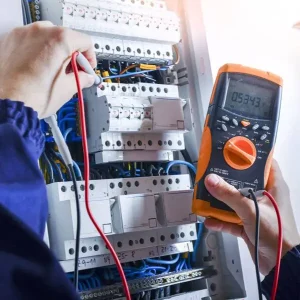
Unlike a visual check, an EICR involves comprehensive dead and live testing of every circuit in the consumer unit. It tests for hidden degradation, overloaded cables, improper earthing, and fire hazards that cannot be detected by casual inspection. For London landlords, obtaining an EICR is both a life-safety safeguard and a statutory requirement under English property law.
Is an EICR Legally Required for Landlords in London?
Yes. The Electrical Safety Standards in the Private Rented Sector (England) Regulations 2020 make electrical safety inspections mandatory for all tenancies created or renewed in England. The regulations apply to private rented sector tenancies, assured shorthold tenancies (ASTs), and licensed Houses in Multiple Occupation (HMOs).
Under the regulations, landlords must satisfy four distinct legal duties:
- Ensure inspection every 5 years: Have the fixed electrical installation inspected and tested at least every 5 years by a qualified, competent electrician.
- Obtain the written report: Secure the completed EICR showing whether the installation is “Satisfactory” or “Unsatisfactory”.
- Serve the report to tenants: Provide a digital or physical copy to existing tenants within 28 days of the test, to new tenants before they occupy the property, and to prospective tenants within 28 days of a written request.
- Supply the local authority: Provide a copy to your London Borough council (e.g., Camden, Westminster, Tower Hamlets, Southwark, Brent) within 7 days of receiving a formal request.
What Does an EICR Inspection Check?
An EICR assesses the fixed electrical installation against British Standard BS 7671 (IET Wiring Regulations, 18th Edition Amendment 2). A qualified electrical inspector performs a thorough physical examination and instrument test across key components:
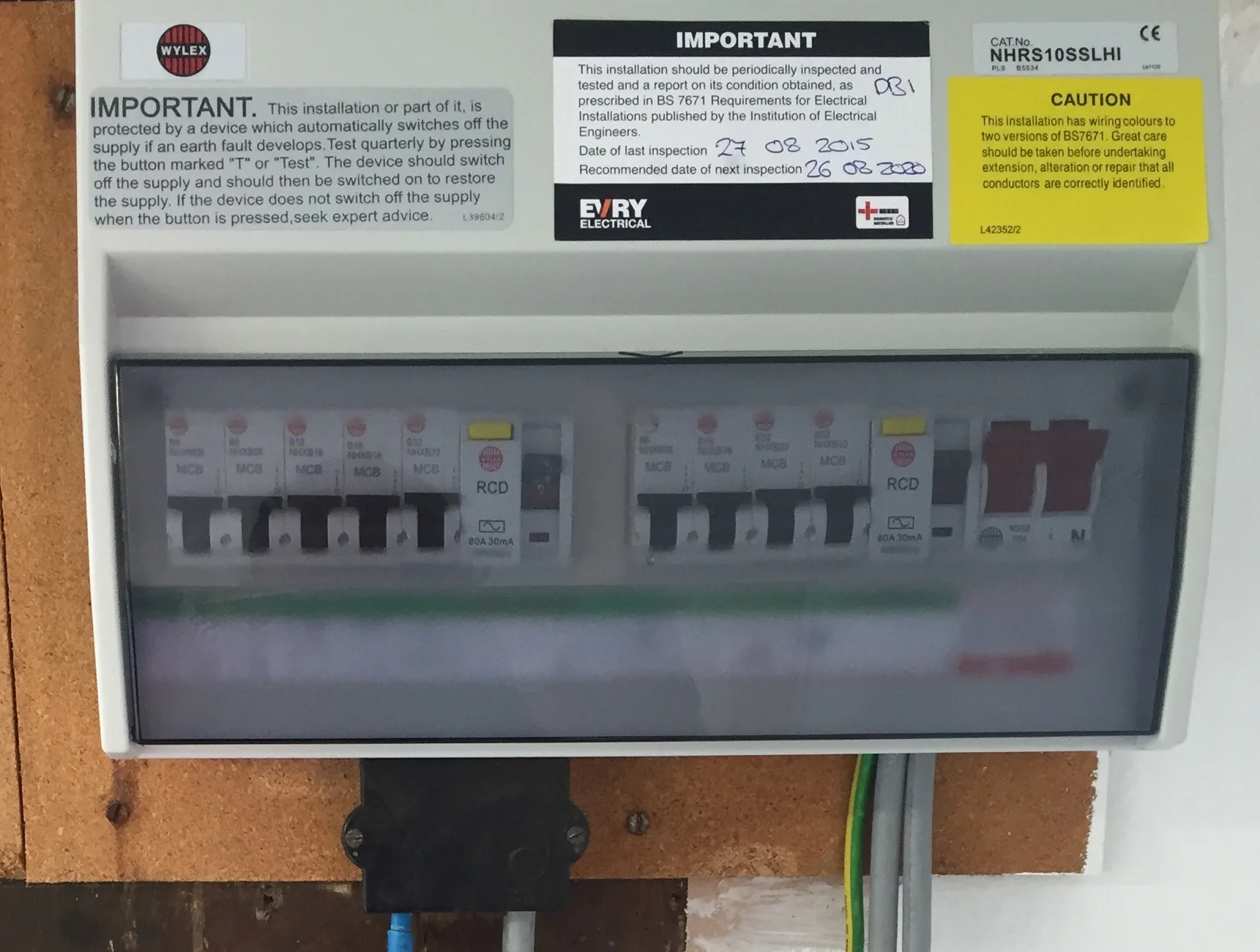
- Consumer Unit / Fuse Box: Verifying adequate earthing, main switch capacity, circuit breaker ratings (MCBs/RCBOs), and mandatory 30mA Residual Current Device (RCD) protection.
- Main Protective Bonding: Confirming earthing conductors are securely bonded to incoming metallic gas, water, and structural services.
- Fixed Cabling & Circuits: Insulation resistance testing (measuring megohms) to ensure wiring insulation has not degraded or cracked over time.
- Socket Outlets & Light Switches: Polarity checks, earth fault loop impedance ($Z_s$) testing, and visual checks for cracked faceplates or scorch marks.
- Bonding in Bathrooms & Kitchens: Supplementary bonding and IP ratings of light fittings in splash zones.
What Do C1, C2, C3 and FI Observation Codes Mean?
When an inspector discovers defects or departures from BS 7671, they record observations using standardised classification codes. Understanding these codes is critical because they determine whether your property passes or fails:
| Code | Classification Meaning | Impact on EICR | Required Landlord Action |
|---|---|---|---|
| C1 | Danger Present. Risk of injury. | UNSATISFACTORY | Immediate remedial action required. Inspector will usually make safe before leaving. |
| C2 | Potentially dangerous. | UNSATISFACTORY | Urgent remedial work mandatory within 28 days (or shorter if specified). |
| C3 | Improvement recommended. | SATISFACTORY | Advisory only. Does not invalidate report; rectification is voluntary best practice. |
| FI | Further investigation required. | UNSATISFACTORY | Mandatory further investigation required without delay. |

Book Your London Electrical Safety Inspection (EICR) Online


Domestic Electrical Safety Certificate EICR 4 Bedrooms

Domestic EPC Certificate 1-3 Beds

Gas Safety Certificate Domestic Meter Upto 2 appliances
How Much Does an EICR Cost in London in 2026?
The cost of an electrical safety certificate in London depends on the property type, number of bedrooms, consumer unit age, and total circuit count. Larger Victorian houses converted into multiple flats or HMOs naturally require significantly more testing time than modern purpose-built apartments.
Smart Property Checks offers fixed, transparent London pricing starting from £99 for 1–3 bedroom residential properties with fully itemised reporting:
| Property Size / Type | Circuit Scope | Indicative London Cost | Turnaround & Format |
|---|---|---|---|
| Studio / 1–3 Bed Apartment | Up to 10 circuits (Single Consumer Unit) | £99.00 | Fast 24h Digital PDF |
| 4–5 Bed House / Terraced Home | Up to 15 circuits | £120.00 – £150.00 | Fast 24h Digital PDF |
| London HMO / Multi-Occupancy Property | Multi-circuit / Sub-distribution boards | £160.00 – £220.00 | Council Licensing Compliant |
| Commercial Office / Retail Unit | Commercial 3-Phase Installation | From £199.00 | Insurance & Lease Compliant |
What Happens If Your EICR Is Unsatisfactory?
Receiving an “Unsatisfactory” report does not mean your entire property needs rewiring. It simply means that one or more specific C1, C2, or FI defects must be rectified by a qualified electrician.
Under English law, landlords must:
- Act within 28 days: Complete all required remedial work within 28 days of the initial test (or sooner if the report specifies).
- Obtain written certification: Secure a Minor Electrical Installation Works Certificate (MEIWC) or an Electrical Installation Certificate (EIC) confirming the work was done.
- Provide written confirmation: Supply written confirmation of completed remedial work to the tenant and the local authority within 28 days of completion.
EICR Requirements for HMOs & Multi-Occupied London Properties
HMOs present heightened electrical demands due to higher tenant density, shared kitchen appliances, and intensive electrical usage. London local councils inspect electrical safety certificates rigorously during Mandatory, Additional, and Selective licensing audits.
In addition to a valid EICR, HMO landlords must ensure electrical safety aligns with other mandatory safety checks:
- Fire Risk Assessment London: Mandatory annual review of communal hallways, fire doors, and escape routes.
- Emergency Lighting Installation London: BS 5266-1:2025 compliant 3-hour escape lighting on shared stairwells.
- Gas Safety Certificate London: Annual CP12 inspection for all gas boilers, cookers, and flues.
- PAT Testing London: Annual portable appliance testing for all landlord-supplied kettles, toasters, and white goods.
10-Point London Landlord Electrical Safety Checklist
Essential Electrical Compliance Verification for Landlords:
- ✓ Current EICR on file: Inspection completed within the last 5 years by a registered electrician.
- ✓ Overall result satisfactory: No outstanding C1, C2, or FI observation codes.
- ✓ RCD protection active: Modern 30mA residual current devices installed and trip-tested.
- ✓ Main bonding verified: Earth clamp connections to gas and water supplies intact and labelled.
- ✓ Remedials completed within 28 days: Written proof of all completed repairs retained.
- ✓ Tenant served within 28 days: Digital PDF copy delivered to all current occupants.
- ✓ New tenants served: Copy provided prior to keys being handed over for new tenancies.
- ✓ Council submission ready: Capable of supplying the EICR within 7 days of council notice.
- ✓ Next inspection date logged: Calendar reminder set before the 5-year expiry date.
- ✓ Wider compliance integrated: Coordinated alongside your EPC Certificate London and fire checks.
Frequently Asked Questions
How often does a landlord need an EICR in London?
Under the Electrical Safety Standards in the Private Rented Sector (England) Regulations 2020, landlords must have the fixed electrical installation inspected and tested at least every 5 years, or sooner if the inspecting qualified electrician specifies an earlier re-inspection date on the certificate.
Is an EICR the same as an electrical safety certificate?
Yes. "Electrical safety certificate" is the popular term used by landlords and tenants, but the legal, official document produced after formal testing is an Electrical Installation Condition Report (EICR).
What happens if my EICR has a C2 observation?
A C2 code means a condition is potentially dangerous and requires urgent remedial action. An EICR with a C2 is classified as Unsatisfactory. Landlords have a legal duty to have the fault rectified by a qualified electrician within 28 days of the inspection.
Does a C3 code fail an EICR?
No. A C3 code means "Improvement Recommended". It identifies an area that does not comply with the latest edition of BS 7671 but does not present an immediate danger. A report with only C3 observations remains classified as Satisfactory.
How long does an EICR inspection take?
A typical inspection takes between 1.5 to 3 hours for a 1–3 bedroom residential apartment or house. Larger HMOs or properties with multiple consumer units and extensive circuit networks can take 3 to 5 hours.
Can I rent out a property with an unsatisfactory EICR?
No. If the report identifies C1, C2, or FI findings, the landlord is in breach of statutory regulations unless the remedial work is completed within 28 days. Letting a property with unresolved dangerous electrical faults can result in local council fines of up to £30,000.
Do tenants get a copy of the EICR?
Yes. Landlords must provide a copy of the EICR to all existing tenants within 28 days of the inspection, to new tenants before they occupy the premises, and to prospective tenants within 28 days of receiving a written request.
Book Your London Electrical Safety Inspection (EICR) Today
Protect your tenants, ensure 100% council licensing compliance, and receive your digital EICR report within 24 hours. Fixed pricing from £99 with zero deposit across all 32 London boroughs.
Related Blogs
Fire Doors for Flats London: 2026 Regulations, HMO Rules & Inspection Guide
Fire doors are the frontline defense against smoke inhalation and…
London Landlord Compliance Checklist 2026: Safety Certificates & Legal Rules
Editorial Note: Written by the Smart Property Checks Compliance Team…

PRS Database London 2026–2027: Landlord Registration, Deadlines & Compliance Guide
Editorial Note: Written by the Smart Property Checks Technical Compliance…