Emergency Lighting Installation London 2026: Regulations, Requirements & Costs

Executive Summary & 2026 Regulatory Snapshot

Under Article 14 of the Regulatory Reform (Fire Safety) Order 2005, landlords, HMO property managers, and commercial building operators across Greater London must ensure emergency routes and exits have adequate illumination in the event of normal lighting supply failure. On 29 October 2025, the British Standards Institution officially withdrew BS 5266-1:2016, establishing BS 5266-1:2025 as the new UK code of practice. Together with BS EN 50172:2024 and BS EN 1838:2024, these updated regulations mandate strict design, verification, and battery autonomy standards for all multi-occupied and commercial buildings.
  • Mandatory Legal Scope: HMOs, shared staircases, corridors, communal flat areas, and all commercial workplaces.
  • Latest Standard: BS 5266-1:2025 expands escape lighting to include local area and standby lighting.
  • London Starting Costs: Dedicated 3-hour emergency lighting installation starts from £150 per unit.
  • Fire Safety Integration: Must align directly with your building’s statutory Fire Risk Assessment (FRA).
commercial property emergency lighting inspection and testing London compliance engineer
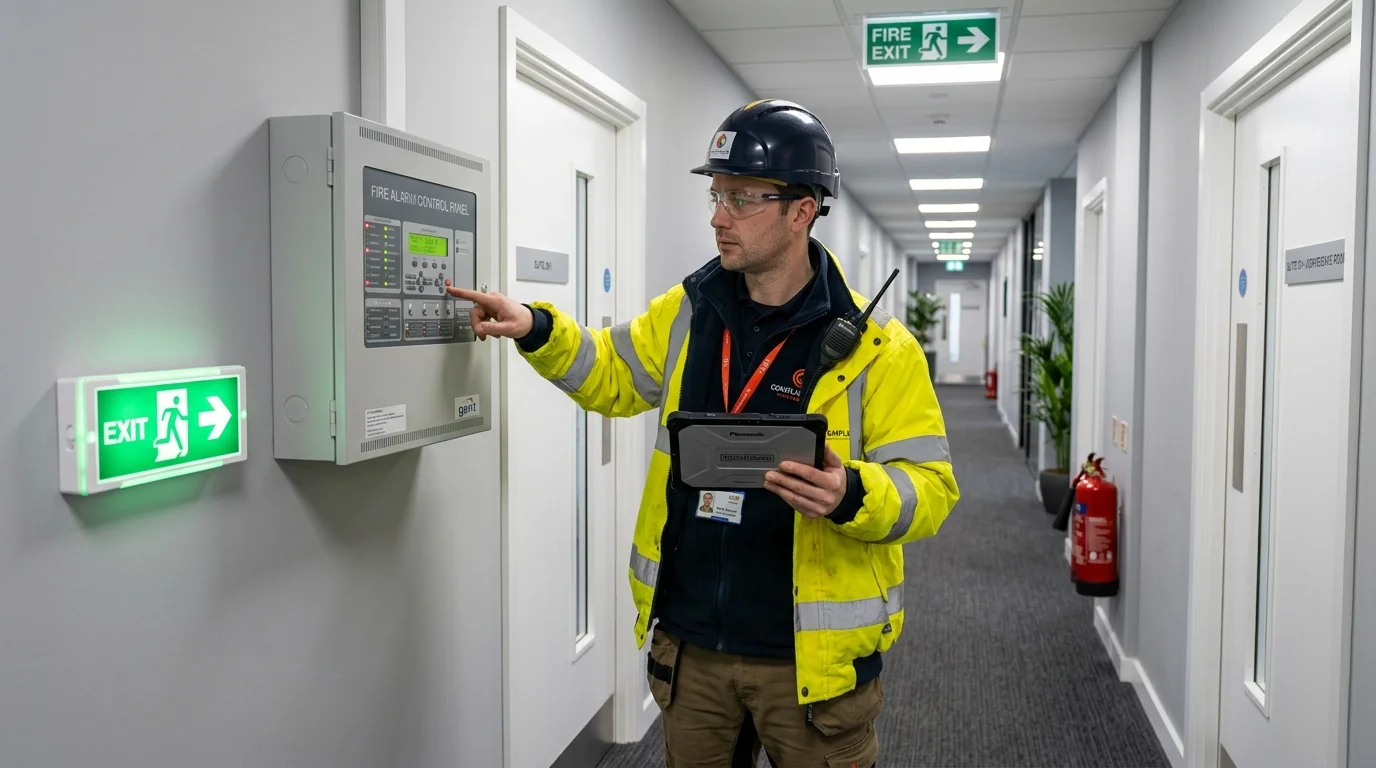
Figure 1: Certified emergency lighting inspection and illuminated escape route luminaire testing across London commercial and communal residential properties.

What Is Emergency Lighting & Why Is It Mandatory in London?

Emergency lighting is a dedicated life-safety illumination system designed to activate instantly and automatically if the normal electrical mains supply is interrupted. Its primary statutory purpose is to prevent panic and provide sufficient visibility so building occupants can safely evacuate along designated escape routes.

In London’s diverse architectural landscape—spanning period Victorian conversions, purpose-built residential blocks, HMOs, and commercial multi-tenant offices—loss of power plunges enclosed stairwells and internal corridors into total darkness. Specifically, emergency escape lighting operates to:

  • Clearly illuminate escape routes: Guiding occupants along communal corridors, hallways, and fire exits.
  • Highlight changes in level: Preventing fatal trips and falls on staircases, landings, ramps, and thresholds.
  • Illuminate fire safety equipment: Allowing occupants and emergency responders to immediately locate break-glass fire alarm call points and fire extinguishers.
  • Ensure safe final exit: Providing bright illumination at exterior doorways leading to a place of ultimate safety.

The 2026 Regulatory Framework: BS 5266-1:2025 & BS EN 50172:2024

The year 2026 marks a crucial transition in UK fire safety engineering. The previous standard, BS 5266-1:2016, was formally withdrawn on 29 October 2025. It has been superseded by BS 5266-1:2025, which now serves as the authoritative code of practice for emergency lighting design, installation, and wiring across the United Kingdom.

The updated standard broadens statutory scope beyond conventional escape lighting to include local area safety lighting and standby lighting. Furthermore, it directly harmonises British practice with two updated European and international standards:

  1. BS 5266-1:2025: The foundational UK Code of Practice detailing system design, wiring integrity, luminaire positioning, and battery autonomy (typically 3 hours for UK residential/commercial premises).
  2. BS EN 50172:2024: The definitive operational standard governing verification, commissioning, routine testing intervals, and mandatory maintenance logbooks.
  3. BS EN 1838:2024: Technical photometric standard setting minimum illuminance levels (e.g., minimum 1 lux along escape route centre lines and 0.5 lux for open anti-panic areas).

Summary of Emergency Lighting Regulatory Standards

Standard / Regulation Legal Status Core Scope & Function
Regulatory Reform (Fire Safety) Order 2005 (Article 14) Statutory Law (UK) Mandates emergency illumination on escape routes wherever necessary for life safety.
BS 5266-1:2025 Current BSI Standard Code of practice for system design, wiring, battery sizing, and installation layout.
BS EN 50172:2024 Current BSI Standard Operational testing, monthly function checks, annual duration tests, and logbook records.
BS EN 1838:2024 Photometric Standard Defines photometric lux requirements (1.0 lux escape routes, 0.5 lux anti-panic).

Emergency Lighting Requirements for London HMOs & Communal Blocks

Houses in Multiple Occupation (HMOs) present elevated fire risks because unrelated tenants share escape routes without communal familiarity. All 32 London borough councils (including Camden, Brent, Newham, Westminster, and Tower Hamlets) enforce emergency lighting as an essential condition for Mandatory, Additional, and Selective HMO licensing.

While single-family private dwellings are generally exempt, BS 5266-1:2025 explicitly applies to all common escape parts. In London residential buildings, emergency lighting is strictly required in:

  • All shared staircases and landings: Covering every flight of stairs and level change.
  • Windowless communal corridors: Where natural borrowed light cannot penetrate during daytime or nighttime power cuts.
  • Final exit routes & vestibules: Illumination above or adjacent to main entrance doors and fire exit release devices.
  • Basement corridors and service rooms: Critical risk areas containing electrical intake equipment or consumer units.

London Fire Brigade officers and council licensing inspectors will look for emergency lighting compliance directly within your statutory Fire Risk Assessment London report.
Book Your London Emergency Lighting Installation Online

Next-day inspection slots available across London and Home Counties. Fast 24-hour digital PDF certificate delivery by accredited NICEIC electrical engineers and IFE fire risk assessors.

Emergency Lighting Installation Cost in London (2026 Price Matrix)

How much does an emergency lighting installation cost in London? Total expenditure depends on property size, number of floors, cable containment requirements, and whether the luminaires are installed into existing lighting circuits or newly wired via dedicated key switches.

Smart Property Checks provides transparent, fixed pricing across all 32 London boroughs, with dedicated 3-hour emergency lighting packages starting from £150.

Installation Type / Service Property Scope Indicative London Cost Certification Provided
Single Emergency Luminaire Supply & Fit 3-Hour LED Bulkhead / Exit Sign £150.00 – £200.00 BS 5266 Minor Works / Cert
HMO Communal Staircase Package 2–3 Storey HMO (2–4 fittings + key switch) £295.00 – £450.00 BS 5266 Commissioning Cert
Commercial Office / Retail Fitout Small Commercial Unit (4–8 fittings) £495.00 – £850.00 Full BS 5266-1:2025 Certificate
Annual 3-Hour Duration Test & Certificate Existing System Periodic Inspection £99.00 – £150.00 BS EN 50172 Periodic Test Cert

Emergency Lighting Installation vs. Periodic Testing: What Do You Need?

It is important to differentiate between installation and periodic testing under UK fire safety law:

  • Emergency Lighting Installation: Involves electrical design, positioning, wiring into test switches, and commissioning new luminaires to meet BS 5266-1:2025. Required when converting buildings to HMOs, upgrading older properties, or following an FRA recommendation.
  • Periodic Testing & Inspection: Under BS EN 50172:2024, existing systems require regular testing:
    1. Monthly Function Test: A brief simulation of mains failure (using a secret fish-key switch) to confirm every luminaire illuminates.
    2. Annual Duration Test: A continuous 3-hour discharge test to prove batteries sustain full illumination for the full rated life.

7-Step Professional Installation & Commissioning Process

Smart Property Checks NICEIC and qualified life-safety electrical engineers execute emergency lighting projects using a strict 7-step engineering process:

  1. Escape Route & Layout Audit: Assessing staircases, directional changes, final exits, and external assembly areas.
  2. Fire Risk Assessment Cross-Check: Aligning luminaire placement with the property’s Fire Risk Assessment and local council licensing conditions.
  3. Photometric Design: Calculating required positions to ensure 1.0 lux minimum along escape paths and adequate coverage above fire alarm call points and first aid stations.
  4. Electrical Installation & Containment: Wiring luminaires using fire-resistant FP200 cabling or unswitched local lighting spur feeds controlled by secure test key switches.
  5. Battery Conditioning & Soak Test: Connecting NiCd/LiFePO4 battery packs and initiating a full 24-hour conditioning charge cycle.
  6. Full 3-Hour Commissioning Discharge: Simulating a complete power failure to certify that all luminaires maintain rated illuminance.
  7. Certification & Log Book Handover: Emitting a compliant BS 5266 Completion Certificate alongside an on-site testing logbook.

10-Point Landlord Compliance & Inspection Checklist

Essential Emergency Lighting Verification for London Properties:

  • ✓ Escape route coverage: Luminaires installed at every exit door and intersection of corridors.
  • ✓ Staircase safety: Each flight of stairs has direct emergency lighting illuminating every tread.
  • ✓ Change of level: Any step or ramp has dedicated illumination within 2 metres.
  • ✓ Direction signs: Illuminated exit signs visible at every point where escape direction is unclear.
  • ✓ Fire equipment: Dedicated emergency lighting positioned near every manual fire alarm call point.
  • ✓ Key switches installed: Secret key switches fitted to prevent tenant tampering while enabling easy monthly testing.
  • ✓ 3-Hour duration verified: Batteries certified to sustain a minimum of 3 hours upon total mains power loss.
  • ✓ BS 5266 certificate on file: Digital commissioning certificate retained for council licensing and insurance review.
  • ✓ Logbook maintained: Monthly function test entries recorded and signed by the responsible person.
  • ✓ Electrical safety integrated: Circuits fully documented in your EICR Certificate London inspection.

Frequently Asked Questions: Emergency Lighting Installation London

Under Article 14 of the Regulatory Reform (Fire Safety) Order 2005, emergency routes and exits requiring illumination must have adequate emergency lighting of adequate intensity if normal lighting fails. Whether a specific property requires emergency lighting depends on its occupancy, layout, and statutory Fire Risk Assessment (mandatory for all HMOs and commercial buildings).

The current authoritative British Standard is BS 5266-1:2025 (Emergency lighting of premises: Code of practice). The previous standard (BS 5266-1:2016) was formally withdrawn on 29 October 2025. The 2025 edition harmonises with BS EN 50172:2024 and BS EN 1838:2024, expanding scope to emergency escape, local area, and standby lighting.

Yes, in the vast majority of cases. All 32 London Borough councils require emergency lighting along shared escape routes (staircases, hallways, and final exits) in licensed HMOs and multi-occupied flat conversions where borrowed light is insufficient or power failure poses an entrapment risk.

Emergency lighting installation starts from £150 for a single dedicated 3-hour LED escape luminaire. HMO communal staircase packages typically range from £295 to £450, while commercial offices range from £495 upwards depending on luminaire quantity, containment, and cable runs.

Under BS EN 50172:2024, emergency lighting requires a monthly functional test (simulating power failure with a secret test key to confirm illumination) and an annual 3-hour continuous duration test to verify battery endurance, with all records documented in a fire safety logbook.

Yes. London Fire Brigade guidance requires that the adequacy, condition, and maintenance of emergency escape lighting be evaluated within your property’s statutory Fire Risk Assessment (FRA). Assessors inspect luminaire coverage, key switch locations, and test records.

Book Your London Emergency Lighting Installation Today

Ensure your London HMO, residential block, or commercial building meets 100% council licensing and BS 5266-1:2025 compliance. Book your certified emergency escape lighting installation with accredited NICEIC life-safety engineers.

Scroll to Top
0