What Is an EICR? A Complete Guide for UK Property Owners
An EICR, or Electrical Installation Condition Report, is a formal report produced after the fixed electrical installation in a property has been inspected and tested. It helps identify unsafe wiring, deterioration, damage and other electrical problems that may put occupants or the property at risk.
For landlords, homeowners, letting agents and property managers, an EICR provides a clear picture of the condition of the electrical installation. It may also highlight repairs or further investigation that should be completed to make the property safer.
Smart Property Checks provides professional electrical safety inspections for landlords, homeowners and businesses. Our team can help you arrange an EICR and understand the findings in your report.
What does EICR stand for?
EICR stands for Electrical Installation Condition Report.
It was previously common to hear this type of inspection described as a Periodic Inspection Report, or PIR. The term EICR is now widely used by electricians, landlords, letting agents and property professionals.
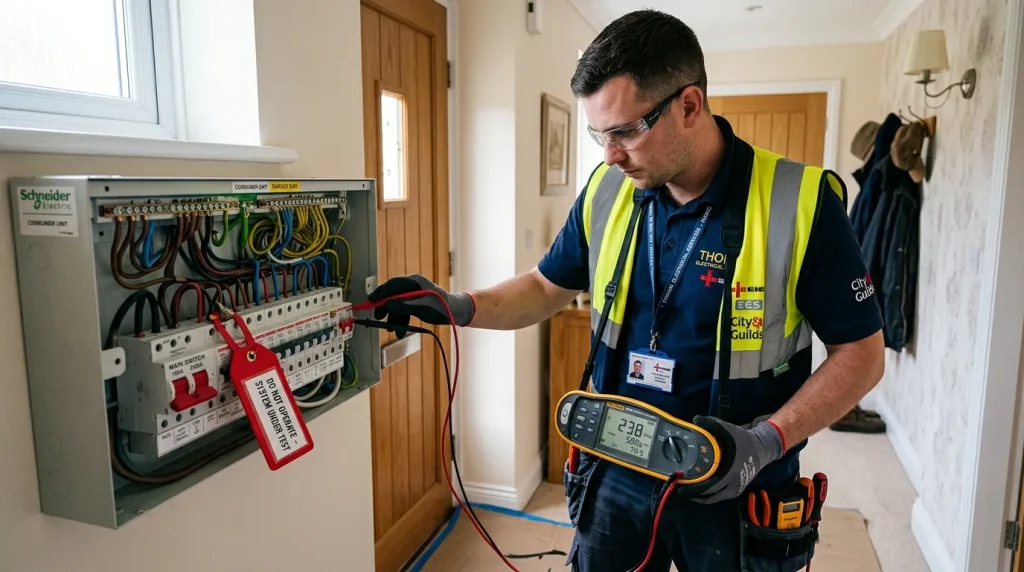
The report records the results of an inspection and testing process carried out on the fixed electrical installation. Its purpose is to determine whether that installation is safe for continued use and whether any defects require attention.
An EICR is sometimes informally described as an electrical safety certificate. Technically, it is a condition report rather than a guarantee that the installation will remain safe indefinitely.
What does an EICR check?
An EICR examines the parts of the electrical system that are permanently installed in the property.
Depending on the property and the agreed scope, the inspection may include:
- Bonding arrangements
- Residual current devices
- Signs of overheating
- Signs of damage or deterioration
- Previous alterations to the installation
- Electrical equipment connected permanently to the supply
- The consumer unit or fuse box
- Fixed electrical wiring
- Electrical circuits
- Sockets and switches
- Lighting circuits
- Earthing arrangements
The electrician will carry out visual checks and electrical tests. Some circuits may need to be temporarily disconnected during testing.
An EICR does not normally test portable household appliances such as kettles, televisions or freestanding lamps. These may require a separate portable appliance test where appropriate.
Why is an EICR important?
Electrical problems are not always visible. A socket may appear normal while damaged wiring or poor connections are hidden behind it.
An EICR can help identify issues such as:
- Damaged electrical accessories
- Inadequate earthing
- Overloaded circuits
- Deteriorated wiring
- Incorrectly completed alterations
- Missing protective devices
- Potential electric-shock risks
- Potential fire risks
- Evidence of overheating
- Circuits requiring further investigation
Finding these issues early may prevent them from becoming more serious or expensive.
For landlords, an up-to-date report can also form an important part of the property’s safety and compliance records.
Who needs an EICR?
1• Private landlords
Landlords need to ensure that the electrical installation in their rental properties is safe.
In England, relevant rented properties must generally be inspected and tested by a qualified person at intervals of no more than five years, unless the previous report specifies a shorter period. Landlords must also provide copies of the electrical safety report to tenants and, in certain circumstances, to prospective tenants or the local authority.
The rules and terminology are not identical throughout the UK:
- England: Electrical safety regulations apply to private rented accommodation and, following updated guidance, relevant social rented properties.
- Wales: Electrical safety requirements form part of the fitness-for-human-habitation duties applying to rented homes.
- Scotland: Private rented homes are subject to electrical safety requirements under the repairing standard.
- Northern Ireland: Regulations require relevant private landlords to arrange electrical inspections at least every five years.
Because legislation can change, landlords should check the current requirements applying to their property and UK nation.
2• Homeowners
Homeowners are not generally subject to the same five-year landlord requirement for an owner-occupied home.
However, an EICR may be sensible:
- When buying an older property
- Before completing major renovation work
- When the history of the electrical installation is unknown
- After flooding or significant property damage
- When sockets, switches or circuits show signs of problems
- Before installing equipment that will add a substantial electrical load
- At intervals recommended by a competent electrician
Electrical installations naturally deteriorate with age and use. Regular professional checks can help homeowners identify problems that are not immediately visible.
3• Homebuyers
A standard property survey does not usually include detailed electrical testing.
A buyer may therefore arrange an EICR before purchasing a property, particularly when:
- The property is old
- The consumer unit appears dated
- Alterations have been completed
- There is little documentation for the electrical work
- The surveyor recommends specialist electrical checks
The report can help the buyer understand whether remedial work may be needed after completion.
4• Businesses and commercial property owners
Commercial properties also require safe electrical installations.
The appropriate inspection frequency will depend on matters such as:
- The type of property
- How the building is used
- The condition of the installation
- The level of risk
- Previous inspection results
- Insurer or contractual requirements
- Advice from the competent person
Business owners and duty holders should not assume that the same interval applies to every commercial building.
Why choose Smart Property Checks?
Choosing an EICR provider should not be based on price alone.
You need a service that offers clear communication, appropriate inspection work and understandable reporting.
Smart Property Checks supports landlords, homeowners and property professionals with property safety services, including:
- Electrical safety inspections
- Gas Safety Certificates
- Fire Risk Assessments
- Energy Performance Certificates
- Related landlord compliance services
Our aim is to make arranging property inspections straightforward and help customers understand the next steps after receiving their report.
The booking process
- Select the appropriate EICR service or request a quote.
- Provide accurate information about your property.
- Agree a suitable appointment.
- Prepare access to rooms, sockets and the consumer unit.
- The qualified professional completes the inspection and testing.
- You receive your report and information about any observations.
- Arrange remedial work where required.
Common Questions
What does EICR stand for?
EICR stands for Electrical Installation Condition Report. It records the condition of a property’s fixed electrical installation following inspection and testing.
Is an EICR a legal requirement for landlords?
Electrical inspection requirements apply to landlords across the UK, but the exact rules differ between England, Wales, Scotland and Northern Ireland. In England, relevant rented properties must generally be inspected at intervals of no more than five years.
How long is an EICR valid?
The report states the recommended date for the next inspection. For many rented properties, the maximum interval is five years, although a shorter interval may be specified.
Does an EICR test appliances?
An EICR mainly covers the fixed electrical installation. Portable appliances may require separate PAT testing.
Can an EICR be unsatisfactory?
Yes. An EICR will normally be unsatisfactory where C1, C2 or FI observations are recorded.
Does a C3 mean the EICR has failed?
A C3 means improvement is recommended. A C3 observation alone does not normally cause the overall report to be unsatisfactory.
Will the electricity be switched off?
Some interruption is normally required so that electrical testing can be completed safely. Ask the inspector about expected disruption before the appointment.
Do homeowners need an EICR?
An owner-occupier is not generally subject to the same five-year landlord requirement, but periodic inspections can help identify hidden deterioration and safety concerns.
What should I do after receiving the report?
Read the observations and recommended next-inspection date. If the report contains C1, C2 or FI codes, speak to a qualified electrician and arrange the required work promptly.
Book your EICR with Smart Property Checks
An EICR helps you understand the condition of your property’s electrical installation and identify problems before they cause further risk or expense.
Whether you own one home, manage a rental portfolio or look after commercial premises, Smart Property Checks can help you arrange the right electrical inspection.
Related Blogs
What Is an EICR? A Complete Guide for UK Property Owners
Home An EICR, or Electrical Installation Condition Report, is a…