
Commercial EICR London 2026: Workplace Electrical Safety, Testing Frequencies & Landlord Costs
Statutory Compliance Authority: Electrical installations in commercial and business premises are legally governed by the Electricity at Work Regulations 1989 (Regulation 4(2)), the Health and Safety at Work etc. Act 1974, and BS 7671:2018+A2:2022 (18th Edition Wiring Regulations). Certified by NICEIC and NAPIT approved electrical contractors.
Commercial EICR London Snapshot: 2026 Compliance Essentials
- Mandatory Testing Frequencies: Commercial offices, shops, and educational buildings require an EICR at least every 5 years; industrial manufacturing and workshops require testing every 3 years; commercial kitchens and leisure premises every 1–3 years.
- Strict Employer & Landlord Liability: Directors and commercial landlords face unlimited corporate fines and personal criminal liability under Section 33 of the Health & Safety at Work Act for electrical negligence.
- Commercial Insurance Invalidation: Commercial property insurance policies routinely contain a strict warranty requiring an in-date, “Satisfactory” EICR; failure to produce one immediately voids fire and business interruption claims.
- Lease & Dilapidation Clauses: Most Full Repairing and Insuring (FRI) commercial leases mandate that either the tenant or landlord maintains certified 3-phase electrical compliance at all times.
- 2026 Pricing: Standard London commercial EICRs start from £149 for single consumer units (up to 12 circuits), scaling to £240–£380 for 3-phase distribution boards.
Every commercial property operating across Greater London—from Canary Wharf high-rise corporate suites and Soho hospitality venues to Park Royal industrial warehouses—relies on heavy, continuous electrical infrastructure. Unlike domestic dwellings with simple single-phase wiring, commercial buildings utilise complex 3-phase (400V) electrical distribution systems, sub-distribution boards, industrial machinery, extensive display lighting, and critical server networks.
A Commercial Electrical Installation Condition Report (EICR) is an exhaustive formal audit conducted by a qualified and accredited electrical engineer. It assesses the fixed wiring, distribution boards, RCD safety trips, earthing arrangements, and circuit integrity to guarantee that employees, customers, and physical assets remain protected from fatal electric shocks and catastrophic electrical fires.
The Legal Framework: Electricity at Work Regulations 1989 & BS 7671
While domestic landlords are governed by the private rented sector electrical regulations, commercial property owners and commercial employers are governed by primary workplace safety legislation:
- Health and Safety at Work etc. Act 1974 (Section 2 & 3): Places a non-delegable general duty on employers and building controllers to ensure, so far as is reasonably practicable, the health, safety, and welfare of all employees and visitors.
- Electricity at Work Regulations 1989 (Regulation 4(2)): Explicitly mandates: “As may be necessary to prevent danger, all systems shall be maintained so as to prevent, so far as is reasonably practicable, such danger.” A periodic EICR is the industry-recognised benchmark used by the Health and Safety Executive (HSE) to prove statutory compliance.
- Management of Health and Safety at Work Regulations 1999: Demands formal risk assessments of workplace electrical hazards.
- Regulatory Reform (Fire Safety) Order 2005: Defective fixed electrical wiring is the leading cause of non-domestic fires in the UK; commercial fire risk assessors routinely require a current “Satisfactory” EICR to validate building fire safety.
Recommended maximum inspection frequencies depend strictly on environmental conditions, electrical load, and public footfall as codified in IET Guidance Note 3 (Inspection & Testing):
| Premises Classification | Maximum EICR Interval | Primary Environmental Hazards | Standard Electrical Setup |
|---|---|---|---|
| Commercial Offices & Retail Shops | 5 Years (or upon change of tenancy) | Overloaded extension leads, server loads, lighting ballast heat | Single & 3-Phase (12–36 circuits) |
| Industrial Units, Workshops & Warehouses | 3 Years | Airborne dust, vibration, mechanical cable impact, moisture | Heavy 3-Phase 400V (24–72+ circuits) |
| Restaurants, Cafes & Commercial Kitchens | 1 to 3 Years (annual visual checks) | Grease accumulation, steam, washdown water, high ambient temperatures | 3-Phase + Gas Interlock isolation |
| Places of Public Entertainment & Leisure | 1 Year (Annual condition inspection) | Intense public volume, stage power, emergency lighting interaction | Multi-board distribution systems |
To ensure total workplace safety, many commercial building operators combine electrical testing with our certified Commercial Fire Risk Assessment London packages.
Understanding Commercial EICR Fault Codes: C1, C2, C3 & FI
When an NICEIC or NAPIT electrical surveyor inspects a commercial property, any observed non-compliances with BS 7671:2018+A2:2022 are graded into four standardised classification codes:
- Code C1 (Danger Present): Risk of injury is present right now. An immediate hazard exists (e.g., exposed 400V live conductors or broken isolators). The engineer must make the hazard safe on site or disconnect the affected circuit with permission immediately. An EICR with a C1 code is automatically UNSATISFACTORY.
- Code C2 (Potentially Dangerous): Urgent remedial action required. While not posing an immediate shock risk during normal dry conditions, a fault or absence of basic protection (such as missing RCD protection on public sockets or broken earthing bonding) could become dangerous under fault conditions. Results in an UNSATISFACTORY EICR.
- Code C3 (Improvement Recommended): A non-compliance with the current 18th Edition wiring standard that does not present an active danger (e.g. absence of SPDs – Surge Protection Devices, or non-combustible fuse box casing in older installations). A C3 code alone does not cause the report to fail.
- Code FI (Further Investigation Required): The inspector identified an unexplained circuit issue or inaccessible installation route that could not be fully tested. An FI code also renders the overall report UNSATISFACTORY.
For commercial leasehold premises, receiving an “Unsatisfactory” report triggers an urgent remedial window. Commercial lease terms generally stipulate that high-priority remedial works (C1 and C2 items) must be executed by certified contractors within 28 days, followed by the issuance of a Minor Electrical Installation Works Certificate (MEIWC) to validate full compliance.
Book Your Commercial EICR & Workplace Safety Checks Online


Emergency Lights Installation

Fire Risk Assessments For All Business Sectors

Gas Safety Certificate Commercial Boiler Service
2026 London Commercial EICR Costs & Pricing Factors
Commercial EICR pricing in London is determined by the number of distribution boards, total circuits, phasing (single-phase 230V vs three-phase 400V), and whether testing must be carried out out-of-hours (evenings/weekends) to avoid disrupting commercial trading operations. Here is a transparent breakdown of 2026 London costs:
| Premises Scope / Size | Average London Price (2026) | Testing Turnaround | Certificates Issued |
|---|---|---|---|
| Small Commercial Unit (1 Consumer Unit, up to 12 Circuits) | £149 – £220 | 24-Hour Digital PDF | Full Commercial EICR |
| Standard Office / Retail Unit (12 to 24 Circuits / 3-Phase) | £240 – £380 | 24–48 Hours | 3-Phase EICR Schedule |
| Large Commercial Floor / Warehouse (24 to 48 Circuits) | £395 – £650 | 48 Hours | Multi-Board Distribution Report |
| Additional Circuits (Over standard package) | £15 – £25 per circuit | Integrated in site audit | Line-by-line circuit test |
| Emergency Lighting 3-Hour Discharge Test (Add-on) | £150 – £220 | Same-day completion | BS 5266 Compliance Certificate |
| Commercial Gas Safety Check (CP42 Bundle) | From £199 | Same-day dual survey | Gas Safe Catering Register |
For businesses operating on-site heating systems or commercial catering, pair your electrical audit with our certified Gas Safety Certificate London services.
Commercial Leases: Is Landlord or Tenant Responsible for the EICR?
In the residential sector, the landlord is unequivocally responsible for electrical certification. In the commercial sector, however, statutory responsibility depends on the specific commercial lease structure and building operational control:
- Full Repairing and Insuring (FRI) Leases: Under a standard FRI lease, the commercial tenant takes on full operational and financial responsibility for the internal repair, maintenance, and statutory compliance of the building. In this scenario, the tenant must commission, pay for, and maintain the periodic commercial EICR.
- Internal Repairing Leases / Multi-Let Buildings: In multi-tenanted office blocks or shopping centres, the freeholder or managing agent retains statutory responsibility for the central landlord supplies, communal risers, plant rooms, lift shafts, and common corridors (recovering costs via the service charge). Tenants are responsible solely for the electrical wiring and sub-boards within their demised suite.
- Handover & Ingoing Lease Schedules: Before a new commercial lease is signed, ingoing commercial tenants should always demand a “Satisfactory” EICR from the landlord. If pre-existing wiring exhibits C1 or C2 defects, resolving them prior to lease commencement prevents the tenant from inheriting costly electrical dilapidation liabilities.
For an overarching review of business lease obligations across all disciplines, read our comprehensive guide to Commercial Lease Compliance Responsibilities.
8-Point Commercial Electrical Safety Checklist for Facilities Managers
To prepare your London commercial premises for a smooth periodic inspection and minimize disruption to daily business operations, follow this operational checklist:
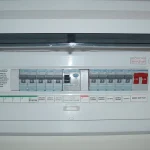
- Clear Access to Distribution Boards: Ensure all main switchgear, sub-boards, and meter cupboards are completely free of stored boxes, stock, or maintenance equipment. Engineers require 1-metre clear working space in front of all panels.
- Accurate Circuit Directory Schedules: Verify that distribution boards contain clear, legible chart labels identifying what each breaker or fuse controls. Unlabelled boards lead to extensive tracing delays and potential “Further Investigation” (FI) flags.
- Schedule Planned Power Outages: Live circuit testing and dead insulation resistance testing require brief circuit power isolation. Coordinate with your IT and facilities teams to shut down sensitive servers and inform staff ahead of time, or schedule out-of-hours testing.
- Inspect Physical Sockets & Isolators: Perform a walk-through to identify cracked socket faceplates, loose trailing cables, scorched switches, or missing blanking plates inside consumer units.
- Test RCD Push-Buttons: Residual Current Devices (RCDs) should be tested quarterly via their integral test buttons to confirm mechanical trip reliability.
- Validate Emergency Lighting Integration: Confirm that commercial emergency escape route lighting is linked to the appropriate local lighting circuits and tested under BS 5266 protocols.
- Review Previous Certification: Provide the electrical engineer with the previous EICR, building floor plans, and any Minor Works Certificates issued following recent office fit-outs.
- Maintain the Electrical Logbook: Keep your digital EICR certificate, remedial work receipts, and periodic PAT testing records stored securely for inspection by local council environmental health officers, HSE inspectors, and insurance auditors.
Frequently Asked Questions About Commercial EICR
Is a commercial EICR a legal requirement in the UK?
Yes. While the Electricity at Work Regulations 1989 do not explicitly use the acronym ‘EICR’, Regulation 4(2) places a strict statutory duty on employers, building owners, and commercial landlords to ensure all electrical systems are maintained in a safe condition. The Health and Safety Executive (HSE) and commercial insurance underwriters recognise a periodic EICR from an accredited NICEIC/NAPIT contractor as the primary legal evidence of compliance.
How often does a commercial building in London need an EICR?
In standard commercial offices, retail shops, and professional business premises, an EICR is required at least once every 5 years (or upon a change of commercial leaseholder). Industrial workshops and manufacturing facilities must be tested every 3 years. Higher-risk premises, such as commercial kitchens, theatres, swimming pools, and petrol stations, require inspections every 1 to 3 years.
Who is responsible for the commercial EICR: landlord or tenant?
In commercial leases, responsibility is defined by the lease agreement. In a Full Repairing and Insuring (FRI) lease, the commercial tenant is legally responsible for maintaining the fixed electrical wiring and paying for the EICR. In multi-tenant commercial buildings with an Internal Repairing lease, the landlord is responsible for communal wiring and main risers (recouped via service charge), while the tenant covers wiring within their demised premises.
Can a business stay open if its commercial EICR is Unsatisfactory?
If the report identifies Code C1 (Danger Present) defects, the affected circuits must be isolated immediately because an active danger exists. If the report contains Code C2 (Potentially Dangerous) items, the business can typically continue operating provided that urgent remedial repairs are scheduled and completed within 28 days. Operating long-term with an unresolved Unsatisfactory EICR voids commercial property insurance and exposes management to HSE prosecution.
What is the difference between domestic and commercial EICR testing?
Commercial electrical systems operate at much higher voltages (often three-phase 400V supplies rather than single-phase 230V) and power complex industrial machinery, commercial kitchen canopies, data centres, and emergency lighting systems. Commercial EICR testing involves larger distribution boards, higher test currents, out-of-hours testing schedules, and stricter BS 7671 workplace compliance standards.
Does commercial property insurance require an in-date EICR?
Yes. Almost all UK commercial property insurance and business interruption policies contain explicit electrical warranty clauses. If a fire or workplace electrical accident occurs and you cannot provide an in-date, ‘Satisfactory’ EICR issued by an accredited contractor, insurers will frequently deny claim payouts, leaving company directors personally exposed to financial losses.
How long does a commercial EICR inspection take?
For a standard small commercial shop or office suite with up to 12 circuits, an on-site survey typically takes between 2 and 4 hours. Larger multi-story offices, industrial warehouses, or hospitality premises with multiple 3-phase sub-distribution boards can take 1 to 2 full days. Testing can be arranged outside normal trading hours to avoid business downtime.
What accreditation should a commercial electrical inspector hold?
Commercial electrical inspectors should be registered Approved Contractors with accredited UK bodies such as NICEIC (National Inspection Council for Electrical Installation Contracting) or NAPIT, holding specific qualifications in periodic inspection and testing (City & Guilds 2391 or equivalent) and 18th Edition BS 7671 certification.
Book Certified Commercial EICR Inspections Across London
Ensure 100% workplace compliance under the Electricity at Work Regulations 1989. NICEIC-accredited engineers, out-of-hours commercial testing, fast 24h digital PDF delivery, and guaranteed fixed pricing across London from £149.
Related Blogs
Fire Doors for Flats London: 2026 Regulations, HMO Rules & Inspection Guide
Fire doors are the frontline defense against smoke inhalation and…
London Landlord Compliance Checklist 2026: Safety Certificates & Legal Rules
Editorial Note: Written by the Smart Property Checks Compliance Team…
PRS Database London 2026–2027: Landlord Registration, Deadlines & Compliance Guide
Editorial Note: Written by the Smart Property Checks Technical Compliance…