London Landlord Compliance Checklist 2026 & Safety Rules

Editorial Note: Written by the Smart Property Checks Compliance Team | Reviewed by a Gas Safe & NICEIC Certified Technical Specialist | Last reviewed: October 2026 | Applicable to: England (Greater London Focus)

London Landlord Compliance Checklist: 2026 Regulatory Snapshot

For private landlords and property managers across Greater London, staying legally compliant requires following a comprehensive London landlord compliance checklist across statutory safety regulations and property certifications. There is no single universal safety document. Instead, landlords must maintain valid certifications across Gas Safety (CP12) annually, Electrical Safety (EICR) every 5 years, an Energy Performance Certificate (EPC) rated Band E or higher (moving to Band C by 2030), and statutory Smoke and Carbon Monoxide Alarm installations. Under the Renters’ Rights framework and the upcoming mandatory national PRS Database, local councils have escalated enforcement with civil penalties reaching up to £30,000 to £40,000 for non-compliant properties.

Managing rental compliance across all 32 boroughs is more tightly regulated than ever before. If you need to arrange certified inspections for your rental property, visit our dedicated commercial hub to book Property Safety Checks London. Many new landlords mistakenly assume that a single overarching inspection covers all regulatory responsibilities. In reality, UK housing legislation imposes distinct, overlapping safety duties that require specialized, accredited engineers to inspect and certify different components of the property.

Failing to secure and serve valid safety certificates does not just trigger hefty local authority fines; it can invalidate landlord insurance policies and legally prohibit landlords from serving valid possession notices. This comprehensive 2026 guide explains every essential landlord safety certificate required in London, renewal timelines, pricing benchmarks, and practical steps to maintain complete legal compliance.

What Landlord Safety Checks & Certificates Does a London Landlord Legally Need?

To let a residential property legally, landlords must complete mandatory London safety checks across four core statutory pillars, supplemented by building-specific fire safety and licensing rules:

1. Gas Safety Certificate (CP12) — Annual Statutory Duty

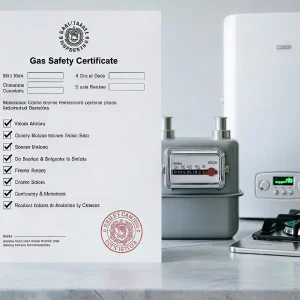
Governed by the Gas Safety (Installation and Use) Regulations 1998. Landlords must have all gas pipework, appliances, and flues checked every 12 months by a certified Gas Safety Certificate London engineer. A copy of the Landlord Gas Safety Record must be provided to existing tenants within 28 days of the check, and to new tenants prior to moving in. Smart Property Checks provides residential CP12 inspections from £57.99.

2. Electrical Installation Condition Report (EICR) — 5-Year Requirement

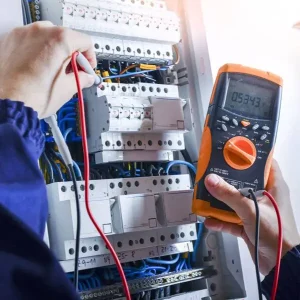
Mandated by the Electrical Safety Standards in the Private Rented Sector (England) Regulations 2020. Landlords must ensure fixed electrical wiring, consumer units, sockets, and light fittings are inspected at least every 5 years by a qualified, competent electrician. Any code C1 (Danger Present), C2 (Potentially Dangerous), or FI (Further Investigation) observations must be remedied within 28 days. Book a certified EICR certificate London from £99.

3. Energy Performance Certificate (EPC) — 10-Year Validity

Under the Minimum Energy Efficiency Standards (MEES), all privately rented domestic dwellings in London must have an EPC rating of at least Band E before being marketed or let. The UK Government has confirmed policy targets requiring rental properties to achieve a minimum Band C by 2030. EPCs remain valid for 10 years, though expired certificates must be renewed immediately before re-letting. Book an accredited domestic EPC certificate London from £70.

4. Smoke & Carbon Monoxide Alarm Regulations

Enforced under the Smoke and Carbon Monoxide Alarm (England) Regulations 2015 (as amended 2022). Landlords must ensure at least one working smoke alarm is installed on every habitable storey of the property. A carbon monoxide alarm is legally required in any room containing a fixed combustion appliance (such as a gas boiler, gas fire, or wood burner), excluding gas cookers. Alarms must be tested and proven operational on the tenancy start date. Learn more about wired smoke alarm installation.

Fire Safety, HMOs & Specialist Property Inspections in London

Beyond the core four certificates, London rental properties frequently trigger additional compliance obligations based on property layout, building height, and tenancy structure:

Fire Risk Assessment (FRA) — Communal Areas & HMOs

Under the Regulatory Reform (Fire Safety) Order 2005, the Fire Safety Act 2021, and the Fire Safety (England) Regulations 2022, the “Responsible Person” must carry out a comprehensive fire risk assessment for all communal hallways, staircases, and shared facilities in multi-occupied residential buildings and Houses in Multiple Occupation (HMOs).

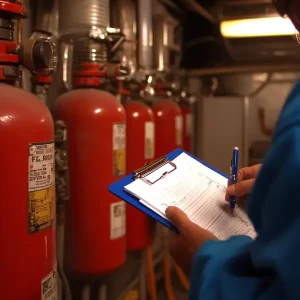
In London’s purpose-built blocks and converted Victorian properties, landlords and block managers must actively evaluate emergency exit routes, FD30/FD60 fire doors, self-closing mechanisms, compartmentation, and signage. For detailed flat and HMO door requirements, see our guide on Fire Doors for Flats London. Professional Fire Risk Assessments London start at £119 for residential communal blocks and £149 for licensed HMOs.

Emergency Lighting Systems (BS 5266-1:2025)

Where rental properties have internal shared escape corridors or windowless stairwells, illuminated emergency escape lighting is required to ensure safe evacuation during a power outage. In October 2025, the British Standards Institution issued the updated BS 5266-1:2025 code of practice. Book certified emergency lighting installation London from £150 with NICEIC electrical testing and annual 3-hour discharge logbook records.

PAT Testing (Portable Appliance Testing)

While the EICR covers fixed wiring, landlords who supply electrical appliances (kettles, toasters, refrigerators, washing machines, microwaves) owe a legal duty of care under the Electrical Equipment (Safety) Regulations 2016 and Consumer Protection Act 1987 to provide safe equipment. While not universally compulsory for standard single tenancies, annual PAT testing is strongly recommended and is an explicit mandatory licence condition for HMOs in most London boroughs. Review pricing in our PAT testing cost London guide.

Legionella Risk Assessment & Asbestos Management

Landlords are legally required under the Health and Safety at Work etc. Act 1974 and HSE Approved Code of Practice (ACoP L8) to assess the risk of Legionella in domestic hot and cold water systems. In properties built before the year 2000, landlords carrying out refurbishment or managing common parts must also understand asbestos obligations under the Control of Asbestos Regulations 2012. Learn more about booking an asbestos survey London.

Hosts operating short-term rentals, holiday lets, or serviced apartments must also maintain a dedicated Airbnb Fire Risk Assessment London to comply with statutory Home Office paying guest standards.

Book Your London Landlord Safety Certificates Online

Fast turnaround, Gas Safe registered engineers & certified NICEIC electricians across all 32 London boroughs. Book certified Property Safety Checks London (Gas Safety CP12, EICR, and EPC) with 24-hour digital certification.

London Borough Licensing, PRS Database & Financial Penalties

One of the biggest pitfalls for landlords operating in Greater London is assuming that national rules are the only standards that apply. London boroughs operate some of the most aggressive discretionary property licensing schemes in the United Kingdom:

  • Mandatory HMO Licensing: Applies nationwide to properties rented to 5 or more occupants forming 2 or more households who share basic amenities.
  • Additional HMO Licensing: Implemented by individual London councils (such as Camden, Brent, Haringey, Southwark, and Newham) covering smaller HMOs with 3 or 4 tenants sharing facilities.
  • Selective Licensing: Imposed in designated geographic wards across London, requiring every privately rented single-family home to obtain a council licence.

The New Mandatory PRS Database Rollout (2026–2027)

Under the UK Renters’ Rights legislative programme, the government is establishing a live national Private Rented Sector (PRS) Database. The registration system begins rolling out on 15 December 2026, with the London regional compliance window scheduled for mid-2027. Landlords will be required to register each dwelling and upload digital proof of current Gas Safety, EICR, and EPC certificates. Operating an unregistered rental or uploading fraudulent certificates triggers civil penalties up to £7,000 for initial offences and £40,000 for persistent breaches. Read our complete guide to the PRS Database London registration.

Financial Penalties for Missing Certificates in London

Failing to secure required landlord safety certificates in London exposes property owners to severe civil, financial, and legal repercussions:

Safety Certificate Statutory Basis Enforcement Authority Maximum Penalty / Consequence
Gas Safety (CP12) Gas Safety Regs 1998 HSE / Local Council Unlimited fines, criminal prosecution, invalidates Section 21
Electrical (EICR) Electrical Safety Regs 2020 Local Housing Authority Civil penalties up to £30,000 per breach
Energy Rating (EPC) MEES Regulations 2015 Trading Standards Up to £5,000 fine per property; public non-compliance register
Smoke & CO Alarms Smoke/CO Regs 2015 (Amended 2022) Local Housing Authority Remedial notice + civil penalty up to £5,000
Property Licensing Housing Act 2004 London Borough Council Unlimited fines, Rent Repayment Orders (up to 12 months rent refunded)
PRS Database Renters’ Rights Act National / Local Authorities £7,000 civil penalty initial; up to £40,000 persistent breach

London Landlord Safety Inspection & Renewal Frequency

To ensure your rental certificates remain current without accidental expiry, refer to this comprehensive statutory frequency benchmark for residential properties in London:

Certificate / Inspection Statutory Frequency Qualified Professional Applicability in London SPC Starting Price
Gas Safety Certificate London (CP12) Every 12 Months Gas Safe Registered Engineer All properties with gas appliances/flues £57.99
EICR (Electrical Safety) At least every 5 Years Qualified Competent Electrician All private tenancies across England £99.00
Energy Rating (EPC) Every 10 Years Accredited Domestic Energy Assessor All marketed or let self-contained homes £70.00
Fire Risk Assessment (FRA) Annual Review / Periodic Certified Fire Safety Assessor (IFE/Tier 3) Communal residential parts, HMOs, commercial £119.00
Smoke & CO Alarms Tenancy Start / 10-Yr Replacement Competent Installer / Electrician Every habitable storey & rooms with combustion Installation quote
PAT Testing Annual (HMOs/Furnished) Certified PAT Testing Engineer Landlord-supplied portable appliances Price per appliance

10-Point London Landlord Compliance Checklist 2026

To avoid compliance lapses and maintain a frictionless property management routine, use this 10-point inspection and record-keeping checklist across your London rental portfolio:

  1. Gas Safety Schedule: Diary an annual gas inspection at month 10 or 11 to ensure a seamless 12-month CP12 renewal window without losing current certificate dates.
  2. EICR 5-Year Log: Verify that your fixed wire electrical condition report is within its 5-year date and confirms a “Satisfactory” outcome with zero outstanding C1, C2, or FI codes.
  3. EPC Rating & Expiry: Confirm your property holds a valid EPC rating of Band E or above, and check whether improvement works will be needed ahead of the proposed Band C transition.
  4. Smoke & CO Alarm Handover: Physically test smoke alarms on each level and CO detectors in rooms with combustion appliances on tenancy commencement day, logging tenant signatures.
  5. Fire Risk Assessment Documentation: For HMOs or flats with internal communal hallways, retain an up-to-date written FRA report and complete all recommended action items.
  6. Appliance Safety & PAT Log: Inspect all landlord-supplied portable appliances for frayed cables or physical damage, maintaining an annual PAT test register.
  7. London Borough Licensing Check: Check your property’s specific postcode on the relevant council portal to verify whether Selective or Additional licensing schemes apply.
  8. Tenant Information Packs: Serve copies of the Gas Safety Certificate, EICR, EPC, and the government’s How to Rent guide to all tenants prior to occupancy.
  9. Digital Document Centralisation: Keep scanned, high-resolution PDF copies of all safety certificates organized in cloud storage, ready for the upcoming PRS Database rollout.
  10. Package Inspections Together: Book multi-service compliance packages (Gas CP12 + EICR + EPC) simultaneously to minimize engineer visits and reduce portfolio costs.

Frequently Asked Questions: Landlord Safety Certificates London

No. There is no single universal landlord safety certificate in the UK. Compliance requires separate certifications from accredited specialists: an annual Gas Safety Certificate (CP12) from a Gas Safe engineer, a 5-year Electrical Installation Condition Report (EICR) from a certified electrician, an Energy Performance Certificate (EPC) valid for 10 years, and fire/smoke alarm compliance records.

At minimum, all London residential landlords must possess: 1) an annual Gas Safety Certificate (if gas appliances or flues are present), 2) a satisfactory EICR dated within the last 5 years, 3) a valid EPC rated Band E or higher, and 4) working smoke alarms on every habitable storey and carbon monoxide alarms where combustion appliances exist. HMOs and communal blocks also require written Fire Risk Assessments and potentially emergency lighting testing.

Under the Gas Safety (Installation and Use) Regulations 1998, a gas safety check must be carried out every 12 months by a Gas Safe registered engineer. Landlords can arrange the check up to 2 months before the current certificate expires while preserving the original renewal deadline (the ‘MOT-style’ gas rule).

Under the Electrical Safety Standards in the Private Rented Sector (England) Regulations 2020, electrical installations must be inspected and tested at least every 5 years, or sooner if specifically recommended by the qualified inspector on the report.

A formal written Fire Risk Assessment is legally mandatory for common parts of residential buildings (communal hallways, stairs, shared kitchens) under the Regulatory Reform (Fire Safety) Order 2005 and for all Houses in Multiple Occupation (HMOs). While not strictly required by statute inside a standalone single-family dwelling, landlords still retain a general statutory duty of care to ensure premises are free from category 1 fire hazards under the Housing Health and Safety Rating System (HHSRS).

Under national law, annual PAT testing is not universally mandatory for single-family lets, but landlords have a strict legal duty under the Electrical Equipment (Safety) Regulations 2016 to supply only safe electrical goods. In contrast, for HMOs and properties licensed under London borough Additional or Selective licensing schemes, regular documented PAT testing is almost universally a compulsory licence condition.

The penalties are severe. Letting without an EICR can incur council civil penalties up to £30,000 per breach. Letting without a Gas Safety Certificate can lead to unlimited fines, criminal prosecution, and invalidates any possession notices. Substandard EPC properties (below Band E) face fines up to £5,000. Furthermore, failing to hold required certificates breaches HMO and selective property licences, risking Rent Repayment Orders requiring the landlord to refund up to 12 months of rent to tenants.

The upcoming mandatory Private Rented Sector (PRS) Database introduced under the Renters’ Rights framework requires landlords to register every rented property and upload digital evidence of active safety certificates (CP12, EICR, EPC). Local councils and prospective tenants will have access to inspect compliance data, making active record maintenance essential to avoid £7,000 to £40,000 civil fines.

Book Complete London Landlord Safety Certificate Packages

Get your Gas Safety (CP12), EICR, EPC, and Fire Risk Assessments completed with guaranteed compliance. Accredited Gas Safe and NICEIC registered engineers providing fast 24-hour digital certification across all 32 London boroughs.

Scroll to Top
0