
Wired Smoke Alarm Installation UK: Landlord Costs, Regulations & Interlinked Rules (2026)

Editorial Note: Written by the Smart Property Checks Technical Compliance Team. Fully compliant with BS 5839-6 standards, Approved Document B (Fire Safety), and official GOV.UK Landlord Guidance on the Smoke and Carbon Monoxide Alarm (Amendment) Regulations 2022. Last updated: September 2026.

What is a wired smoke alarm installation and how does it work?

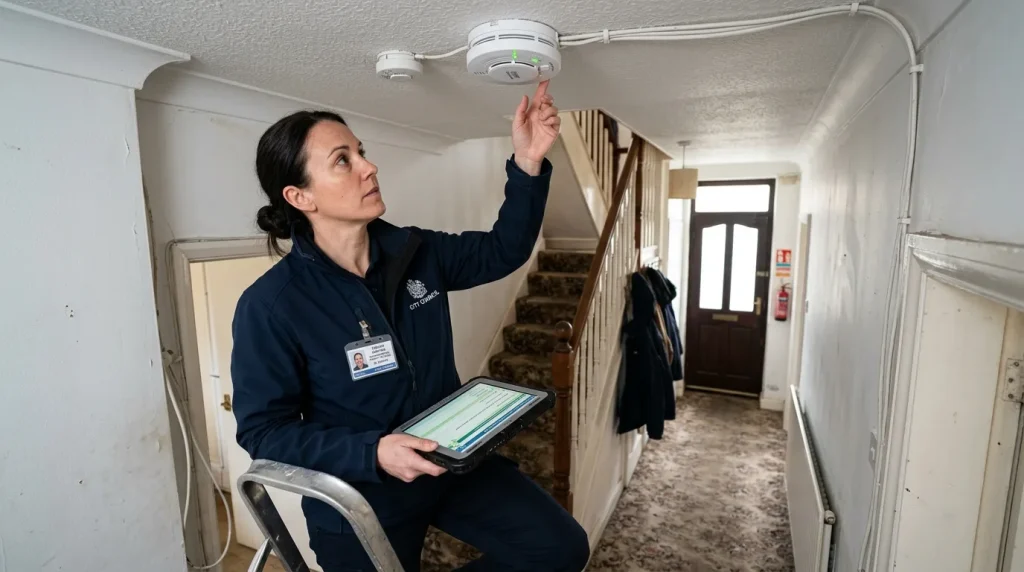
A wired smoke alarm installation involves hardwiring optical smoke, heat, and carbon monoxide alarms directly into a property’s 230V mains electrical lighting or dedicated radial circuit, supported by a sealed 10-year rechargeable lithium backup battery (conforming to BS 5839-6 Grade D1).

Unlike standalone battery alarms that only alert occupants in the immediate room of a fire, mains-wired alarms are interlinked. When an optical sensor in the ground-floor hallway detects smoke, every alarm across the entire property sounds simultaneously at a minimum of 85dB(A). This rapid acoustic alert provides tenants and families vital minutes to evacuate multi-storey properties before toxic smoke fills the escape routes.

⚖️ UK Statutory Mandate: The 2022 Smoke & Carbon Monoxide Regulations

Under statutory legislation (The Smoke and Carbon Monoxide Alarm (Amendment) Regulations 2022), private and social landlords in England must ensure at least one smoke alarm is installed on every storey used as living accommodation, plus a carbon monoxide alarm in any room containing a fixed fuel-burning appliance (excluding gas cookers). Furthermore, building regulations (Approved Document B) and council HMO licensing standards legally mandate mains-powered hardwired interlinked systems for all new lets, material alterations, and shared houses.

Book Your Property Safety Certificate Online

Next-day inspection slots available across London and Home Counties. Fast 24-hour digital PDF certificate delivery by accredited Gas Safe, NICEIC and IFE registered engineers.

At A Glance: Smoke Alarm Grades & Landlord Compliance (BS 5839-6)

British Standard 5839-6 categorises domestic fire detection systems into distinct engineering grades and categories. Understanding the difference between Grade D and Grade F is critical to ensure council licensing compliance and insurance validity:

System GradePower SourceBackup BatteryWhere PermittedCompliance Rating
Grade D1Mains 230V HardwiredSealed 10-Yr Rechargeable LithiumHMOs, Private Rentals, New Builds✅ Gold Standard (Recommended)
Grade D2Mains 230V HardwiredReplaceable 9V AlkalineOlder Rentals (requires annual battery swaps)⚠️ Compliant, higher maintenance
Grade F1Battery OnlySealed 10-Yr Tamper-Proof LithiumExisting Single Lets (England Only)Basic minimum only; banned in HMOs
Grade F2Battery OnlyReplaceable 9V AlkalineOwner-Occupied Existing Buildings❌ Fails HMO & Scottish Regulations

How much does wired smoke alarm installation cost in the UK in 2026?

In 2026, professional wired smoke alarm installation costs in the UK typically range from £144.00 to £290.00 for a standard residential rental property. Pricing depends on the number of detection points required, property layout, and whether hardwired 3-core cabling or RF radio-frequency interlinked bases are utilised.

Property TypeTypical ConfigurationAverage UK CostSmart Property Checks Fixed Price
1–2 Bed Flat / Single Storey1x Optical Smoke (Hallway) + 1x Heat Alarm (Kitchen)£180 – £240From £144.00
3–4 Bed House (2 Storeys)2x Optical Smoke (Hall + Landing) + 1x Heat (Kitchen)£260 – £350From £210.00
5–6 Bed HMO / 3 Storeys (LD2)3x Smoke (Escape Routes) + 1x Heat (Kitchen) + Carbon Monoxide£420 – £600From £320.00
Additional Interlinked UnitExtra Optical Smoke or Heat Alarm per bedroom/lounge£35 – £55 / unit+£20.00 / extra unit

Note: All installations conducted by certified NICEIC electricians include full supply of Aico/FireAngel Grade D1 units, wiring, testing, and official Minor Electrical Installation Works Certification (MEIWC).

Where to put smoke alarms: UK positioning and placement rules

Correct sensor placement is essential under BS 5839-6 to avoid false alarms while ensuring rapid fire detection. Follow these statutory placement rules:

  • Circulation Routes (Hallways & Landings): Install optical smoke alarms on every level of the property. Position within 7 metres of any living area door and within 3 metres of any bedroom door.
  • Kitchens & Cooking Areas: Always install a Class A1 Heat Alarm rather than an optical smoke alarm. Heat alarms trigger solely on ambient temperature spikes (above 58°C), preventing nuisance activations from toaster steam or cooking fumes.
  • Ceiling Mounting Distances: Smoke alarms must be mounted on ceilings at least 300mm away from walls, corners, and light fittings. Never install alarms in “dead air” corners where ceiling and wall meet, as air currents prevent smoke from reaching the sensor chamber.
  • Sloped / Pitched Ceilings: Install within 600mm vertically of the peak or ridge of the ceiling.
  • Carbon Monoxide (CO) Alarms: Position 1 to 3 metres horizontally from any fuel-burning appliance (gas boiler, wood stove, fire), mounted on the ceiling or at head height on a wall.

Why choose Smart Property Checks for wired smoke alarm installations?

At Smart Property Checks, our fully accredited electrical and fire compliance division helps landlords, letting agents, and homeowners guarantee full statutory compliance without hassle:

  • NICEIC Registered Electricians: Professional, certified installation complying with 18th Edition Wiring Regulations (BS 7671) and BS 5839-6.
  • Premium Grade D1 Commercial Hardware: We install commercial-grade Aico and FireAngel alarms featuring tamper-proof 10-year rechargeable lithium batteries.
  • Fixed, Transparent Pricing: Single units from £144.00 with just £20.00 for additional interlinked heads. No hidden call-out fees.
  • Integrated Multi-Certificate Savings: Combine your smoke alarm install with an EICR Electrical Inspection, Gas Safety Certificate (CP12), or Emergency Escape Lighting.
  • Fast 24-Hour Digital Certification: Official Minor Works electrical certification delivered straight to your inbox within 24 hours of job completion.

Common Questions

Yes. Electricians can power the alarms from the nearest permanent live lighting circuit. By utilising RF (radio-frequency) wireless interlinking bases, alarms communicate wirelessly with each other while drawing continuous mains power, eliminating the need to tear up floorboards or chase walls for interlinking cables.

Optical (photoelectric) alarms use an infrared light beam that scatters when visible smoke particles enter the chamber. They are significantly faster at detecting slow, smouldering fires (like foam furniture or overheating electrical wiring) and are far less prone to false alarms compared to older radioactive ionisation alarms, which are now largely phased out across the UK.

Grade D1 mains-powered alarms use sealed, tamper-proof rechargeable lithium batteries that recharge continuously from the mains supply and never require replacement during the unit’s 10-year lifespan. Grade D2 alarms use standard 9V alkaline backup batteries that require annual replacement.

Professional installation from a certified NICEIC electrician typically costs between £144.00 and £210.00 for a 1-to-2 detector domestic package. HMOs and 3-storey houses requiring 4 to 6 interconnected alarms generally cost between £250.00 and £450.00 depending on cable routes.

Yes. Under British Standard 5839-6 Category LD2 and council HMO licensing rules, shared houses and licensed HMOs legally require smoke alarms in all escape routes (hallways, landings, stairs) AND all high-risk rooms, which includes communal living rooms and all tenant bedrooms, plus a heat alarm in the kitchen.

All smoke and heat alarms have a strict 10-year operational expiry date from the date of manufacture. After 10 years, internal optical sensors degrade and must be replaced to maintain building insurance validity and tenant safety.

In England, single-family private rental properties can legally satisfy the Smoke and Carbon Monoxide Alarm Regulations 2022 using 10-year sealed tamper-proof lithium battery alarms. However, for licensed HMOs, new builds, properties undergoing significant renovations, and all Scottish rental homes, mains-powered hardwired (Grade D1) interlinked alarms are mandatory.

A qualified electrician must provide an official Minor Electrical Installation Works Certificate (MEIWC) or an Electrical Installation Certificate (EIC) certifying that the installation complies with BS 7671 (18th Edition) and BS 5839-6.

Book Certified Wired Smoke Alarm Installation Across the UK

Guarantee full UK fire safety compliance, protect your tenants, and satisfy HMO licensing rules. Fixed pricing from £144.00 with fast digital certification by accredited NICEIC electricians.

Scroll to Top
0