EPC Rating Rules for Landlords 2026: Band E Minimum Standards & MEES Guide

Editorial Note: Written by the Smart Property Checks Energy Team | Reviewed by an Accredited Domestic Energy Assessor (DEA) | Last reviewed: September 2026 | Applicable to: England & Wales

Energy efficiency compliance is a cornerstone of UK residential property management. Under the Minimum Energy Efficiency Standards (MEES) framework, landlords cannot legally market, let, or renew tenancies without holding a valid Energy Performance Certificate (EPC) that satisfies statutory minimum energy benchmarks.

Understanding the exact EPC rating rules for landlords protects property portfolios against local council enforcement notices, civil financial penalties of up to £5,000, and void tenancy periods under the Energy Efficiency (Private Rented Property) Regulations 2015.

What are the EPC rating rules for landlords in 2026?

Under current UK MEES regulations in 2026, all domestic private rented properties in England and Wales must have a minimum Energy Performance Certificate (EPC) rating of Band E (SAP score 39 or higher). It is unlawful for a landlord to let or continue letting a property rated Band F or Band G unless a valid statutory exemption is registered on the PRS Exemptions Register.

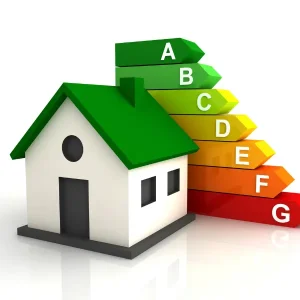
An EPC assessment evaluates a property’s fabric, insulation, heating plant, and hot water systems, producing an energy efficiency rating from Band A (most efficient, score 92–100) down to Band G (least efficient, score 1–20). An EPC is legally valid for exactly 10 years from the date of issue.

⚖️ Legal Status: What Happened to the Proposed EPC Band C Rule?

While the UK government previously proposed raising the minimum standard to EPC Band C for all rental properties, that mandatory timeline was officially scrapped in late 2023. The current legal minimum standard remains Band E. However, voluntary energy efficiency upgrades to Band C or D are strongly recommended to increase property value, reduce tenant utility bills, and future-proof against upcoming legislation.

Book Your Property Safety Certificate Online

Next-day inspection slots available across London and Home Counties. Fast 24-hour digital PDF certificate delivery by accredited Gas Safe, NICEIC and IFE registered engineers.

At A Glance: 2026 EPC Rating Bands & Landlord Legal Thresholds

The complete breakdown of domestic EPC rating bands, SAP point scores, and statutory letting status:

EPC Band SAP Score Range Landlord Letting Status Council Penalty Risk
Band A 92 – 100 Points Fully Compliant (Exceptional) None
Band B 81 – 91 Points Fully Compliant (High Efficiency) None
Band C 69 – 80 Points Fully Compliant (Standard Target) None
Band D 55 – 68 Points Fully Compliant (Average UK Home) None
Band E 39 – 54 Points Minimum Legal Threshold None (Meets Minimum)
Band F 21 – 38 Points UNLAWFUL TO LET Up to £5,000 Civil Fine
Band G 1 – 20 Points UNLAWFUL TO LET Up to £5,000 Civil Fine

The £3,500 Cost Cap & Landlord MEES Exemptions Explained

Under MEES rules, landlords with sub-standard properties (Band F or G) are required to invest up to a statutory cost cap of £3,500 (including VAT) in energy efficiency improvements. If all cost-effective measures up to £3,500 have been installed and the property still fails to reach Band E, the landlord can register an official 5-year exemption on the National PRS Exemptions Register.

Valid statutory exemptions include:

  • “All Improvements Made” Exemption: Relevant energy efficiency measures up to the £3,500 cap have been completed, but the property remains below Band E (valid for 5 years).
  • “High Cost” Exemption: Even the cheapest recommended energy improvement exceeds £3,500 in total cost.
  • Third-Party Consent Exemption: A sitting tenant, freeholder, or local planning authority (e.g. for listed buildings) refuses necessary consent for wall or glazing alterations.
  • Devaluation Exemption: An independent RICS surveyor confirms that energy efficiency works would reduce the market value of the property by more than 5%.

Practical Landlord Action Plan: 4 Steps to Guarantee EPC Compliance

To ensure your rental property satisfies MEES regulations and avoids Section 8 eviction complications under the Renters Rights Act 2026, follow this 4-step workflow:

  1. Verify Your Current Rating on the Official Register: Check your property’s certificate status on the official government EPC register (find-energy-certificate.service.gov.uk) before marketing or letting.
  2. Implement Quick-Win Cost-Effective Upgrades: Upgrading to 270mm loft insulation (£350–£600), 100% low-energy LED lighting (£30–£60), and thermostatic radiator valves (TRVs) can lift a score by 8 to 15 SAP points into Band D.
  3. Book an Accredited Domestic Energy Assessor (DEA): Commission a certified on-site assessment from Smart Property Checks (£70.00) to inspect the property and lodge the certificate.
  4. Coordinate with Other Safety Certificates: Ensure your EPC is filed alongside your annual Gas Safety CP12 and 5-year EICR electrical report to pass council landlord inspections.

Why book your EPC assessment with Smart Property Checks?

At Smart Property Checks, our accredited energy assessors support landlords and estate agents across London and the Home Counties:

  • Certified Domestic Energy Assessors (DEA): Fully accredited Elmhurst and ECMK registered assessors with next-day inspection slots.
  • Transparent Fixed Pricing: Domestic EPC certificates starting from £70.00 for 1-3 bedroom properties with zero hidden charges.
  • Commercial EPC Services: Certified Level 3 & Level 4 commercial energy assessments for shops, offices, and retail premises starting from £288.00.
  • Fast 24-Hour Digital Register Lodgement: Official 10-year digital certificate registered and sent to your email within 24 hours of inspection.

Common Questions

The council can issue an Hazard Awareness Notice, serve a formal Improvement Notice, carry out emergency remedial action, or issue civil penalty fines up to £30,000.

Damp and mould, missing or broken smoke alarms, non-compliant fire doors, and lack of valid gas CP12 or EICR electrical certificates are the most common failure triggers.

Council officers must give landlords and tenants at least 24 hours written notice before routine inspections, except in emergency cases with court warrants.

A Category 1 hazard is a severe defect posing imminent risk of death or serious injury, such as extreme cold, severe damp, or dangerous exposed wiring.

Yes. Most council licensing schemes require thumb-turn locks on final exit doors so tenants can escape during fires without keys.

Councils typically charge administrative enforcement fees between £300 and £600 when serving an Improvement Notice on a landlord.

Yes. We provide complete compliance packages covering Gas CP12, EICR, EPC, Fire Risk, and PAT testing in single appointments.

Book your council licensing compliance bundle with Smart Property Checks

Ensure your property passes its council inspection on the first visit. Book your compliance package with certified engineers and receive verified digital certificates in 48 hours.

Scroll to Top
0