Commercial Gas Safety Certificate London (CP42): 2026 Costs & Requirements

Executive Summary: 2026 London Commercial Gas Compliance

Operating a commercial kitchen, restaurant, takeaway, hotel, or catering facility in Greater London involves rigorous statutory responsibilities beyond standard domestic gas checks. Here are the core baseline facts every business owner and commercial landlord must understand:
  • Legal Foundation: The Health and Safety at Work etc. Act 1974 and the Gas Safety (Installation and Use) Regulations 1998 (GSIUR) mandate that gas systems and appliances in workplaces must be maintained in a safe condition.
  • What CP42 Means: CP42 is the established industry trade inspection record used specifically for commercial catering gas installations. It acts as verifiable legal evidence of a thorough safety inspection.
  • Mandatory Ventilation Interlocks: Under British Standard BS 6173:2020, commercial catering appliances must be interlocked with the mechanical extract ventilation system so gas automatically shuts off if extraction fails.
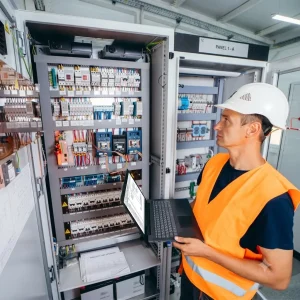
  • Engineer Competency: Domestic gas engineers (CCN1) cannot legally sign off commercial catering kitchens. Engineers must hold specific commercial catering qualifications (COMCAT 1, 2, 3, 4 or 5).
  • Indicative London Costs: Typical 2026 London pricing starts around £150–£220 + VAT for single-appliance setups, £250–£380 + VAT for 2 to 4 appliances, and £380–£550+ for multi-zone commercial cooking lines.
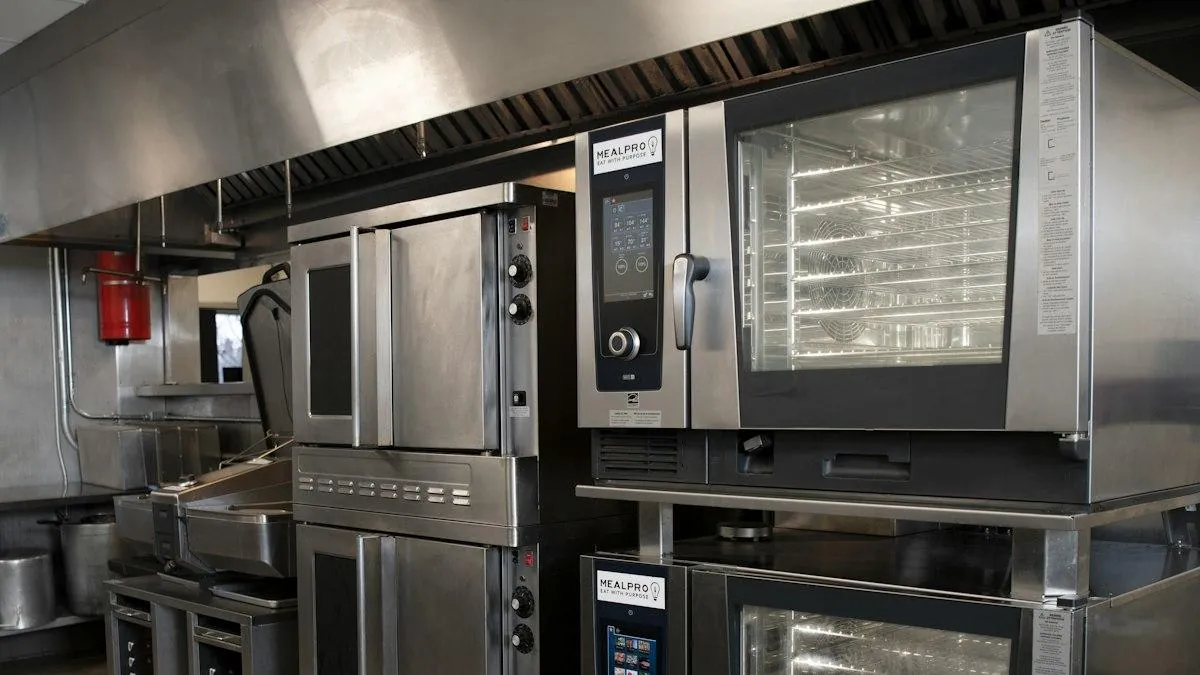
Commercial catering gas appliances, combi ovens, and mechanical extraction canopy in a London restaurant kitchen
Commercial catering gas combi ovens, deep fryers, and stainless steel extraction hood inspected under BS 6173 standards in London.

What Is a Commercial Gas Safety Certificate (CP42)?

In the UK gas industry, CP42 is the recognized trade classification for a Commercial Catering Gas Safety Inspection Report. When restaurant owners, head chefs, or facilities managers search for a commercial gas safety certificate in London, the CP42 document is typically what local authority Environmental Health Officers (EHOs), commercial insurers, and landlords require.

Unlike residential dwellings where a domestic boiler and hob represent the entire gas system, a busy London commercial kitchen operates high-output commercial ranges, heavy-duty pressure fryers, chargrills, salamanders, and combi-steamers. These appliances consume large volumes of natural gas or LPG, generate extreme heat, and produce dangerous combustion gases—most notably carbon monoxide (CO) and nitrogen dioxide (NO2).

The CP42 certificate provides an itemized inspection record certifying that all gas pipework, safety valves, burners, flues, and extraction systems have been tested by an accredited commercial gas engineer and deemed safe for continued operation.

Who Needs a Commercial Gas Safety Inspection in London?

Any London business or commercial premises that utilizes commercial gas-fired catering or heating equipment has a statutory obligation under workplace health and safety legislation. Typical establishments requiring routine commercial gas inspections include:

  • Restaurants, Bistros & Brasseries: Independent dining rooms, fine dining venues, and franchise restaurant chains.
  • Takeaways & Fast Food Outlets: High-demand frying ranges, tandoori clay ovens, and wok cooking suites.
  • Pubs, Bars & Gastro Venues: Commercial kitchens supplying bar food and hot pub lunches.
  • Hotels & Hospitality Venues: Multi-floor catering operations, banqueting facilities, and room-service kitchens.
  • Dark Kitchens & Food Delivery Hubs: High-density delivery-only commercial cooking suites common across London.
  • Care Homes & Hospitals: Continuous high-volume institutional food preparation facilities.
  • Schools, Colleges & Universities: Educational canteens and catering training facilities.
  • Bakeries & Food Production Units: Industrial gas deck ovens, rotary rack ovens, and steam boilers.

Is a CP42 Certificate Strictly a Legal Requirement?

Online advice regarding commercial gas safety is frequently misunderstood. Strictly speaking, no single UK statute explicitly states the words “Thou shalt possess a CP42”. Instead, the legal obligation is rooted in primary UK health and safety legislation:

  • Health and Safety at Work etc. Act 1974: Requires employers and dutyholders to ensure, so far as is reasonably practicable, the health, safety, and welfare of all employees and the general public.
  • Gas Safety (Installation and Use) Regulations 1998 (GSIUR): Regulation 35 and Regulation 36 enforce strict duties on employers and commercial landlords to ensure that gas appliances, installation pipework, and flues are maintained in a safe condition.
  • HSE Catering Information Sheet CAIS23: The Health and Safety Executive (HSE) explicitly advises that commercial gas equipment and extraction canopies must be maintained regularly, with annual inspections being the general minimum standard.

In practice, while the law requires “safe maintenance”, the CP42 inspection record is the universally accepted proof demanded by London borough Environmental Health inspectors, insurers, and landlords. Letting commercial gas appliances operate without this documentary proof invalidates commercial property insurance and can result in immediate prohibition notices from the HSE.

Certificate Comparison: CP12 vs. CP42 vs. Commercial Plant (CP15/CP17)

Commercial property operators often confuse domestic and commercial gas certificates. Here is how they compare across scope, premises, and qualifications:

Certificate Premises & Use Key Equipment Covered Engineer Qualification
CP12 (Landlord Gas Safety Record) Domestic rented properties, buy-to-let flats, HMOs. Domestic boilers (<70kW), domestic hobs, gas fires, domestic flues. Gas Safe CCN1 & CENWAT (Domestic).
CP42 (Commercial Catering Safety) Commercial kitchens, restaurants, takeaways, hotel catering, bakeries. Commercial ranges, fryers, combi ovens, gas interlocks, extraction canopies. Gas Safe CCCN1 & COMCAT 1–5 (Commercial Catering).
CP15 / CP17 (Commercial Heating) Commercial offices, residential blocks, warehouses, industrial plant rooms. Commercial plant boilers (>70kW), radiant tube heaters, warm air units. Gas Safe COCN1 & CORT1 / CDGA1 (Commercial Heating).

British Standard BS 6173 & Gas Interlock Systems

One of the most critical elements of a commercial kitchen gas safety inspection is the Gas Interlock System. Under British Standard BS 6173:2020 (Specification for installation and maintenance of gas-fired catering appliances), commercial catering kitchens fitted with mechanical extract ventilation must feature an automatic gas shut-off interlock.

How a Gas Interlock System Protects Kitchen Staff

The interlock panel continuously monitors ventilation performance via differential air pressure switches or fan electrical current sensors. If the extraction canopy fan fails, becomes blocked with grease, or is turned off, the interlock system automatically trips the gas solenoid valve, immediately isolating the gas supply. This prevents kitchen air from filling with toxic carbon monoxide, unburnt hydrocarbons, and suffocating carbon dioxide.

During a CP42 inspection, the engineer will physically test the interlock panel. If the interlock has been bypassed, overridden, or fails to shut off gas upon ventilation failure, the installation will be classified as Immediately Dangerous (ID) or At Risk (AR), and the gas supply must be isolated until repaired.

Why Domestic Engineers Cannot Inspect Commercial Kitchens

A frequent mistake made by London hospitality managers is booking a domestic heating engineer to inspect their restaurant kitchen. Under Gas Safe Register rules, being Gas Safe registered is not a universal license—engineers are strictly certified only for specific appliance categories.

Commercial catering gas equipment requires specialized competencies under the COMCAT scheme:

  • COMCAT 1: Open burner equipment, boiling pans, bain-maries, commercial ranges, and hobs.
  • COMCAT 2: Commercial pressure fryers and pressure cookers.
  • COMCAT 3: Deep fat fryers, griddles, salamanders, and chargrills.
  • COMCAT 4: Traditional fish and chip shop frying ranges.
  • COMCAT 5: Forced draught burners.

A certificate signed by an engineer without active COMCAT endorsements is legally invalid and will be rejected by London borough Environmental Health officers and commercial insurance underwriters.

Book Your Commercial Property Safety Inspection Online

Next-day commercial kitchen and boiler inspection slots available across Greater London. Certified Gas Safe COMCAT registered engineers with fast 24-hour digital CP42 certificate delivery.

Commercial Gas Safety Certificate Cost in London (2026 Indicative Rates)

Because commercial catering installations vary widely in size and complexity, pricing is generally calculated per appliance alongside pipework and interlock testing. The table below outlines typical 2026 market rates across Greater London:

Kitchen Setup Appliances Included Typical London Cost (ex. VAT) Typical Duration
Small Kitchen / Cafe 1 to 2 appliances (e.g. gas range + fryer) + gas tightness test. £150 – £220 1.5 to 2 hours
Standard Restaurant / Pub 3 to 5 appliances (range, fryers, chargrill, combi oven) + interlock test. £250 – £380 2.5 to 4 hours
High-Volume Commercial Line 6+ commercial appliances, multiple canopies, dual interlocks, LPG/sub-meters. £380 – £550+ Half day / Full day

Factors that influence pricing: Kitchen access restrictions (e.g. early morning before service vs. out-of-hours night attendance), LPG bottle arrays vs. mains natural gas, complex stainless steel extraction ductwork, and whether full appliance servicing is booked alongside the safety check.

Commercial Leases: Landlord vs. Tenant Responsibilities

When commercial premises are leased, determining who is legally responsible for commercial gas safety depends on the lease structure:

  • Full Repairing and Insuring (FRI) Leases: The commercial tenant is typically responsible for all internal maintenance, including catering gas appliances, extraction ductwork, interlocks, and annual CP42 certifications.
  • Multi-Let Premises & Food Halls: The commercial freeholder or superior landlord usually retains responsibility for primary incoming gas mains, main emergency shut-off valves, and common risers, while individual operators manage appliances within their demised unit.

Learn more in our detailed guide on commercial lease compliance and maintenance responsibilities. Both parties should verify lease terms well before scheduled renewal audits to prevent contractual disputes.

10-Point Commercial Kitchen Gas Safety Checklist

To ensure your commercial kitchen passes its CP42 inspection without costly reinspection delays, complete these 10 audit checks:

  1. Compile Full Appliance Register: Record the make, model, serial number, and gas input rating (kW) for every gas appliance on site.
  2. Verify Gas Safe ID Credentials: Confirm the visiting engineer holds current COMCAT catering qualifications on the back of their Gas Safe card.
  3. Check Emergency Control Valve (ECV): Ensure the main quarter-turn gas isolation lever is clearly marked, accessible, and not obstructed by kitchen supplies.
  4. Inspect Gas Hose Restraints: Confirm all flexible gas hoses have restraining chains attached to prevent tension on connections when pulling cookers out for cleaning.
  5. Test Mechanical Extraction: Clean canopy grease filters and ensure extraction fans run smoothly without bearing squeals or airflow reduction.
  6. Verify Interlock Functionality: Check that gas cannot be ignited unless the extraction fan is actively operating. Never allow staff to bypass interlock switches.
  7. Inspect Flame Appearance: Burners should display crisp blue flames with distinct inner cones; lazy yellow or sooty flames indicate incomplete combustion and carbon monoxide risks.
  8. Clear Combustion Air Openings: Ensure low-level fresh air louvres and make-up air vents are clean and unobstructed by storage boxes.
  9. Review Previous Records: Keep historical CP42 certificates, equipment manuals, and remedial work receipts in an easily accessible site compliance binder.
  10. Schedule Advance Booking: Book your annual inspection 4 to 6 weeks before certificate expiration to allow sufficient time for any required appliance parts.

Integrating CP42 into Your London Commercial Property Compliance

A commercial kitchen gas certificate is one vital component of a comprehensive commercial safety strategy. To maintain total regulatory compliance across your London commercial building, coordinate your gas inspections alongside:

Visit our complete London Landlord Safety Certificates & Commercial Compliance Hub or contact our London commercial team on 020 8432 3282 for bundled commercial kitchen appointments.

Frequently Asked Questions

A CP42 is the standard UK trade inspection record used to document safety checks on commercial catering gas equipment, installation pipework, and ventilation systems. It confirms that appliances in restaurants, cafes, pubs, and takeaways have been inspected by an accredited commercial Gas Safe engineer.

While the specific form name ‘CP42’ is an industry trade designation rather than a statutory act, regular inspection and maintenance of commercial gas equipment is legally mandatory under the Health and Safety at Work etc. Act 1974 and the Gas Safety (Installation and Use) Regulations 1998. The CP42 serves as the official legal evidence demanded by Environmental Health Officers, insurers, and landlords.

Commercial catering gas inspections must be carried out at least once every 12 months as recommended by the Health and Safety Executive (HSE CAIS23) and equipment manufacturers. Heavily used kitchens, multi-shift delivery hubs, or older installations may require more frequent servicing.

In 2026, London commercial gas safety inspections typically start at £150 to £220 + VAT for small kitchens with 1 or 2 appliances. Standard restaurant kitchens with 3 to 5 appliances range from £250 to £380 + VAT, while large multi-zone commercial kitchens with complex extraction systems can exceed £450+ + VAT.

No. Domestic Gas Safe engineers holding CCN1 and CENWAT qualifications cannot legally inspect or work on commercial catering gas installations. Engineers must hold specific commercial catering competencies under the COMCAT scheme (COMCAT 1 through 5).

A gas interlock system automatically shuts off the gas supply if the kitchen mechanical extract ventilation system fails or is switched off. Under British Standard BS 6173:2020, gas interlocks are mandatory for commercial catering installations with mechanical extraction to prevent the dangerous buildup of carbon monoxide.

Under a Full Repairing and Insuring (FRI) commercial lease, the tenant is typically responsible for maintaining and certifying all catering gas appliances and extraction equipment they control. In multi-tenanted properties, the landlord is usually responsible for common incoming gas infrastructure and primary building flues.

If an engineer identifies a safety fault, the appliance will be classified according to the Gas Industry Unsafe Situations Procedure (GIUSP) as either Immediately Dangerous (ID) or At Risk (AR). The engineer will isolate the appliance with the dutyholder’s permission until remedial repairs are carried out. Operating an isolated unsafe appliance is a criminal offense under gas safety law.

Book your London commercial gas inspection with Smart Property Checks

Ensure your commercial kitchen, restaurant, or business premises passes all local authority Environmental Health and insurer audits. Book your annual CP42 inspection with Gas Safe COMCAT-qualified commercial engineers.

Scroll to Top
0